When you work on a desert river, it is easy to measure progress in miles of flowing water. But some of the most important progress happens before the first shovel hits the ground.
Over the past two years, Sonoran Institute and our partners have taken a major step toward the future of the Santa Cruz River. With support from the Water Infrastructure Finance Authority of Arizona, we asked two big questions: Where should we restore the river, and what is an improved river worth to the communities around it?
Today, we have a much clearer answer.
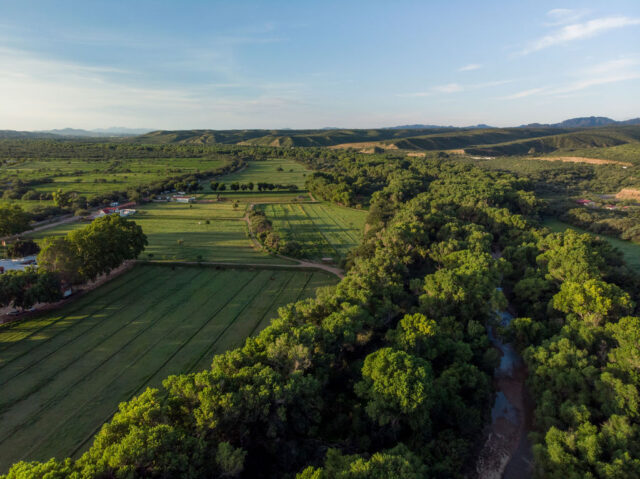
Our new Santa Cruz River Restoration Plan looks at more than 40 miles of river from the U.S.–Mexico border to Green Valley, including a border-crossing tributary, Oso Wash. A companion Economic Analysis measures some of the benefits the river already provides and gives us a way to assess future restoration investments. Together, they provide a roadmap for agencies, landowners, funders, communities, and Sonoran Institute to move from planning to action.
Link to the Economic Study by AECOM
Link to the Restoration Plan by Kimley-Horn and Associates
A river that is already working for us
One of the clearest lessons from this work is that the Santa Cruz River is not only an environmental resource; it is integral to the region’s water system, economy, wildlife habitat, recreation network, and identity.

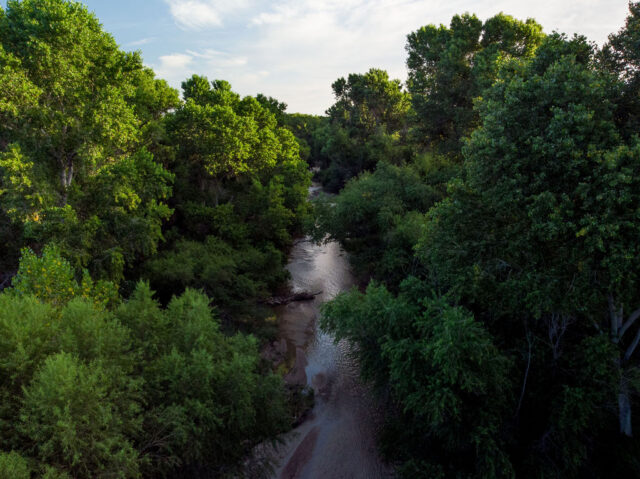
Today, highly treated wastewater released to the river helps recharge the aquifer and support miles of flowing river and riparian habitat. The Economic Study estimates that current groundwater recharge provides about $4.46 million in value each year, recreation provides about $6.2 million annually, and existing riparian habitat and wildlife ecosystem services may provide as much as $49.3 million each year.
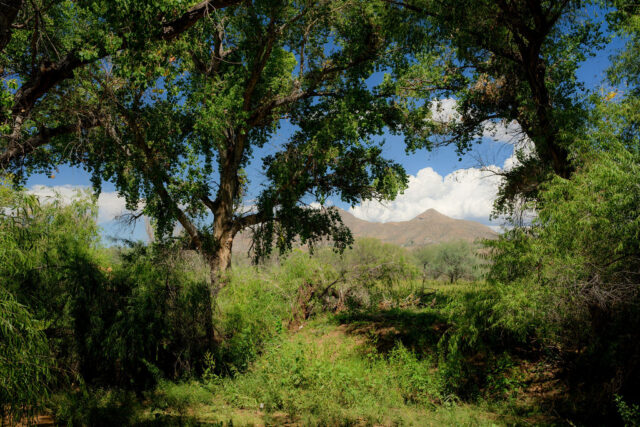
Those numbers help us describe benefits that are easy to see but harder to place on a balance sheet: shade from a cottonwood, a morning spent birding, water soaking into the ground, and habitat for fish, dragonflies, and migrating birds.
For me, that is one of the most exciting outcomes of this work. We are moving beyond saying restoration is good. We can increasingly show where it makes sense, what it can accomplish, and why the investment is worthwhile.
From possibilities to projects

The Restoration Plan does not prescribe one solution for the entire river, because the Santa Cruz changes dramatically as it moves north.
Some reaches flow year-round. Others are dry much of the year. Some have healthy riparian forests. Others are deeply incised, disconnected from their floodplains, affected by invasive plants, or burdened by trash.
So the plan gives us a toolbox.
Depending on the location, restoration could mean reconnecting the river to its floodplain, planting native vegetation, improving wetlands, capturing trash, improving public access, or using simple nature-based structures that slow water and help the river heal itself. Restoration could also look like protection of stable reaches that are currently functioning well and ensuring their stable conditions continue.
 Partners helped shape the restoration priorities identified for the river. A binational Stakeholder Advisory Group identified the highest priorities as increased surface water, improved groundwater recharge, connected habitat and green space, better water quality, and more native vegetation.
The plan also identifies three pilot areas— Palo Parado, Oso Wash, and Amado—where we can begin turning these ideas into real projects.
At a more stable reach, Palo Parado, the plan explores low-tech approaches that could slow water, capture sediment, stabilize the channel, and help increase vegetation. In contrast, at Oso Wash and Amado, the plan outlines large-scale engineering and nature-based concepts like constructing wetlands and re-establishment of natural flow paths, both of which could improve habitat, groundwater recharge, and water quality.
These recommendations are not construction drawings yet. They are the bridge between a broad vision and the engineering, permitting, landowner agreements, monitoring, and investment needed to effect the Santa Cruz River’s future condition.
The planning phase is ending. The implementation opportunity is beginning.
An investment can do more than restore one site
When Sonoran Institute first sought this funding, our goal was intentionally ambitious. We wanted water infrastructure, river restoration,

community engagement, and binational cooperation to work together rather than as separate efforts. Our proposal called for both an economic study and a restoration plan so future decisions could be based on science, community priorities, and measurable benefits.
Now, a public agency can work from a shared technical framework. Engineers can move promising concepts toward design. Researchers can monitor results. Communities can help define success. Funders can help advance a specific project instead of first paying to determine where opportunities exist.
And a successful pilot can teach us how to restore the next mile better. The Restoration Plan describes these pilot areas as a learning laboratory, where different approaches can be deployed, monitored, improved, and adapted elsewhere along the river.
The next chapter needs partners
Completing these reports is worth celebrating, but a finished report is not the finish line. The next steps are the ones you can see on the ground:
site-specific design, engineering, landowner coordination, permitting, native vegetation, trash reduction, monitoring, and construction. The Restoration Plan makes clear that implementation will require continued cooperation among governments, landowners, agencies, conservation organizations, technical experts, and funders.
That is also where Sonoran Institute can add the most value.
At Sonoran Institute, we connect science with community priorities, bring public and private partners to the same table, translate research into projects, and stay involved long enough to learn from the results.
The Santa Cruz River has already shown us how quickly life can return when clean water and thoughtful investment come together. We know the value. We know where many of the opportunities are. And we know much more about how to act.
Now we need partners who want to help turn that knowledge into a healthier, more resilient, and more connected Santa Cruz River. Do you want to be part of it?
Written by Luke Cole, PhD | Director, Santa Cruz River Program, Sonoran Institute